
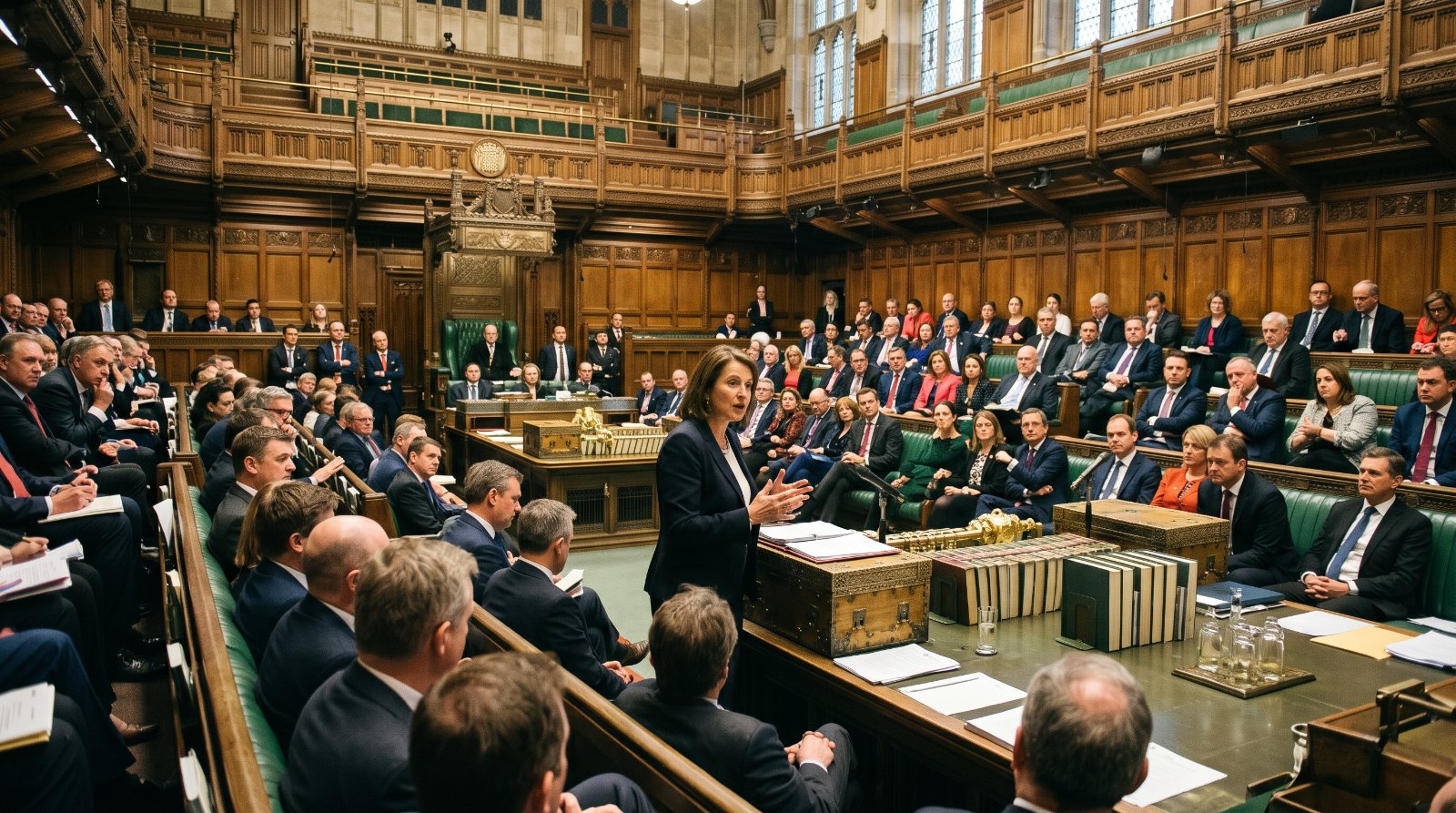
Home Secretary’s statement reveals further details about ‘earned settlement’
The Home Secretary made a statement in the House of Commons yesterday afternoon regarding the ‘earned settlement’ proposals which provides additional detail on what we can expect from them.
The statement is supplemented by a detailed response to the consultation which was published around the same time as the speech, eight months after the consultation ended.
So what do we know now? Here are the highlights.
Standard qualifying periods
As expected, the following groups will have a three-year qualifying period:
Those who are earning £125,141 a year
Those who are in ‘high talent’ routes, namely Global Talent, Innovator Founder and Sportsperson
The following groups will have a five-year qualifying period:
Those who are earning £50,271 a year
Those working in a qualifying public service job, i.e. education or healthcare
Those who have a ‘British connection’, such as the partner or parent of a British citizen or those on the UK Ancestry route
Others will have the same qualifying period they have now:
The Hong Kong BN(O) route
Afghan Schemes
Windrush
HM Armed Forces, including Gurkhas
Bereaved partners
Unaccompanied asylum-seeking children
Children in local authority care
Children and young people who grew up in the UK
Victims of domestic abuse
The policy document doesn’t name Adult Dependent Relatives, though one must assume this is an oversight. It’s entirely possible that because the refusal rates are currently so high, they just haven’t seen one in a while and forgot this route exists. Note that some of these groups may still be subject to some of the other requirements under these proposals, such as the ‘mandatory minimums’.
The following groups are completely outside of these proposals, including the mandatory minimums:
EU Settlement Scheme
Turkish businesspeople and workers (Ankara)
Tier 1 Investor (closed route)
Pre-2012 Overseas Domestic Worker (closed route)
Children brought from Calais camps (closed route)
Everyone else will have a ten-year qualifying period as standard, with some exceptions.
Mandatory minimums
Applicants will also be required to meet the following mandatory minimums:
‘Spotless’ criminal record, which means literally no criminal record; even an absolute discharge or a court-imposed fine will now see you refused settlement, presumably forever
English language requirement at level B2 (other than refugees on a UK Resettlement Scheme)
No unpaid government debt, such as NHS and litigation debt
Three years of National Insurance contributions; however, it appears they will look at this on a household level rather than an individual level (more on this below)
Transitional provisions
Carers who joined the Skilled Worker route before the White Paper was published in May 2025 will benefit from transitional provisions. They will be split into two groups:
Group one are carers who meet the settlement sponsorship and salary requirements of the Skilled Worker route, including a salary above £25,000, who will keep their five-year qualifying period.
Group two are carers who do not meet all of these requirements. This includes, for example, carers earning below the required salary or who are not currently sponsored. They will be able to obtain a further five-year visa extension, which will not be tied to any particular employer, and will be able to settle at the end of that period if they meet the requirements by then.
Carers who joined after will be subject to a standard ten-year route, though in either case they may benefit from this policy:
From 1 February 2027 care workers who have lost their employment due to the sponsor licence being removed will have up to 120 days to get a secure job offer, and a further 60 days to resolve their visa and employment status. If they are not able to secure a job offer within 120 days, or resolve their employment status within 180 days, we will curtail their visa, and the individual will need to leave the UK.
Public service workers who joined the route before May 2025 will also benefit from a five-year route under transitional provisions if they are on a national pay scale and work in healthcare or education below RQF level 6, such as nursing auxiliaries and teaching assistants.
Separately, public service workers employed in an occupation previously identified by the Migration Advisory Committee, including teachers, lecturers, nurses and doctors, will qualify for a permanent five-year qualifying period. You can find the list of occupations in Annex C on page 54 of the policy document.
Refugees
Refugees who enter the UK on one of the ‘safe and legal routes’ soon to be implemented by the government will have a five-year route to settlement.
As previously threatened, anyone arriving by a route other than a safe and legal route will have a 20-year route to settlement. A further ten years will be added to this if the applicant arrived illegally, such as by way of small boat. For anyone not paying attention that means a whopping 30-year qualifying period.
Those in work or study may be able to reduce their qualifying period by ten years, but only by first switching into the new Protection Work and Study route.
Immigration law breaches and benefits
Anyone who has previously breached immigration law, which will be defined as overstaying, breaching a condition of their visa, using deception in an application or frustrating immigration control, will have an automatic 20-year qualifying period which cannot be reduced even in the face of positive factors such as high earnings.
The devil will be in the details but I cannot imagine how this can be implemented in anything approaching a fair or proportionate way. I already find myself heartbroken at having to tell someone with a British spouse but no children who has lived here for over two years in the five-year partner route that their brief, accidental overstaying of a few months means they have to leave the UK, return to their home country and serve out a 12-month re-entry ban before applying to re-enter as a partner and restarting the qualifying period from scratch. I don’t know how I’ll bear to tell them that they will additionally be subject to a new 20-year qualifying period.
Those applying in the three, five and ten-year qualifying periods will be expected not to have claimed public funds in the previous five years. If the applicant must keep claiming public funds (you know, to be able to feed themselves and their children without ending up on the street), they will be able to settle after 20 years instead.
Ten-year long residence
The ten-year long residence route to indefinite leave to remain will be closed, as expected. You will now be able to count time spent in routes that lead to settlement towards the qualifying period, namely:
longer-term work, talent and family routes, referred to as core permission
specified talent and innovation routes, referred to as the high talent group
Family and Private Life
Core Protection Work and Study
Core Protection; and
Safe and Legal routes
‘Core permission’ includes current five-year partner and parent routes. It excludes ‘Article 8 ECHR cases’, which one would think includes the standard partner and parent routes given these are deemed human rights applications, but the term is apparently being used to denote what we think of as the current ten-year routes. Confusingly, many of these routes are in more than one category, including Global Talent and Innovator Founder.
There is also a list of routes that will not count towards one’s qualifying period:
Visit
Student
Global Business Mobility
Temporary Worker Routes
Youth Mobility
Seasonal Worker
Overseas Domestic Worker
Graduate and High Potential Individual
Ukraine Scheme routes, including the Homes for Ukraine Sponsorship Scheme, the Ukraine Family Scheme, the Ukraine Extension Scheme and the Ukraine Permission Extension Scheme
Leave Outside the Rules (LOTR)
That is perhaps to be expected, but what is surprising is that not all routes to settlement can be combined, even under this new model:
Under Earned Settlement, time spent on protection or human-rights routes (for example, refugee or Article 8 routes) will not be able to be combined with time spent on work or family routes to meet the qualifying residence period. Where someone moves between these routes, the qualifying period for the new settlement pathway will start when they move onto it.
This prevents people from ‘topping up’ time accrued on one type of route with time on a fundamentally different route in order to reach settlement sooner. For example, someone who comes to the UK on a work visa and later claims asylum will not be able to count their previous work-route residence towards the qualifying period for settlement through the protection system.
It seems that in many other cases where the routes lead to settlement, it will be possible to combine time spent in different routes, for example, combining time spent as a Skilled Worker with time spent in the current five-year partner route. However, as now, it appears that a number of these routes will have exclusions that mean you are not able to combine them, even with routes in the same broad category, such as Core Protection and Core Protection Work and Study (my emphasis):
The normal pathway to settlement from Core Protection will be 20 years. However, refugees will be able to earn a shorter pathway by moving into sustained work, education or training. Those who do so will be able to move onto Protection Work and Study and may qualify for settlement after 10 years on that route, provided they meet the relevant requirements.
The 10-year qualifying period will begin when the individual moves onto Protection Work and Study. Time previously spent on Core Protection will not count towards that period.
We will need to wait for the statement of changes to confirm how this will work in practice.
Dependants
As you may recall, the previous policy document on this subject was extremely sparse on details, which strongly suggested that the government just had no idea what to do about dependants. Now, we have more detail.
Partner dependants will be able to settle at broadly the same time as the main applicant, unless they moved here later, instead of having their own independent qualifying period based on their own contributions. I am assuming that they will still need to meet the mandatory minimums, though this is not spelled out. It’s not clear whether this will permit some partners to settle faster than now, for example those who currently have a five-year qualifying period while the main applicant has a three-year one.
Children under 18 will be able to settle at the same time as their parents, as now. They won’t have to meet the income, government debt, English language or Life in the UK requirements, though they will remain subject to the suitability requirements.
Children between 18 and 24 will be able to settle at the same time as their parents and will be exempt from the individual income (National Insurance contributions) requirement. However, they will need to meet the other mandatory minimums. Crucially, it appears someone in this position can settle before their parents in certain circumstances, which the following example suggests:
A 22-year-old university graduate remains in the UK with child dependant status. They can settle as a dependant only when both of their parents settle. Alternatively, they may apply for settlement independently if they meet all the mandatory and qualifying requirements of a relevant pathway.
I am unclear on what this means, as it suggests meeting the mandatory minimums is not enough and they would also have to meet the requirements of a ‘relevant pathway’. Currently, those rules require both parents to be settled (or exceptional circumstances), so presumably this refers to something different; otherwise this option would be entirely moot.
Children 25 or over will be expected to qualify for settlement independently, by meeting all mandatory minimums, or switch into their own immigration route to settlement in their own right. This is worded as:
This will principally affect young adults whose family has not yet reached settlement by the time they turn 25, for example because the family is on a longer settlement pathway. By that stage, the Government considers it reasonable normally to expect an adult to establish an independent basis for settlement, while retaining appropriate safeguards.
It’s not completely clear whether this means a 25-year-old can settle if they meet the mandatory minimums even if their parents are not able to settle yet, though the example given for this is as follows:
A 25-year-old who still holds child dependant status has been unable to settle as their parents have not met the requirements of a settlement pathway. They will be able to apply independently if they meet all the mandatory settlement requirements. If they do not qualify, they will be expected to move onto an appropriate immigration route in their own right.
So it sounds like they can, on pain of being bumped off their dependant status if they fail to qualify for indefinite leave to remain at that point. It will be interesting to see how this is implemented in practice.
How earnings are considered
There are three brackets, in line with the above:
three years for the highest economic contributors (earning at least £125,141, in line with the additional rate of income tax);
five years for higher earners (earning at least £50,271, in line with the higher rate of income tax); and
ten years as the default for those making a sustained contribution of £12,571.
The new rules will take a depressingly-named ‘best years’ approach. For example, where someone is on a five-year route to settlement, the government will look at their strongest three years out of the five when assessing whether the requirements are met. This is designed to mitigate the impact parental leave, caring responsibilities and long-term sickness can have on an applicant’s ability to meet the requirements.
So for a three-year qualifying period, the applicant is expected to make £125,141 per year in three of the last four years. For a five-year qualifying period, it’s £50,271 per year in three of the last five years. For a ten-year qualifying period, it’s £12,571 per year in five of the seven years immediately before settlement. The example given is this:
For example, someone on the standard 10-year pathway earns above £12,571 for three years, then takes two years of maternity leave during which her earnings fall below the threshold. She then returns to work and earns above £12,571 for a further two years. In total, she has met the earnings threshold in five of the seven years immediately before applying for settlement, so she meets the contribution requirement.
What’s worrying is that this suggests that when the government uses ‘National Insurance contributions’, what they really mean is ‘earn above £12,571 in taxable income’, as many women on maternity leave will be in receipt of Child Benefit, which gives you National Insurance credits. Apparently those credits won’t count, otherwise those years wouldn’t automatically be treated as ‘lost years’.
However, there will be unspecified exemptions:
Exemptions will apply where it would be inappropriate to require someone to demonstrate a minimum income requirement of £12,571. This will include children, people aged 65 and over, and those unable to meet the requirement because of a physical or mental condition.
I would expect the physical or mental condition exemption to be modelled on the current process for waiving the English language and Life in the UK test requirements for ILR and naturalisation.
It’s confirmed that the thresholds for the different reductions based on income will move with the corresponding tax brackets when they do. That’s fantastic news for higher and additional rate taxpayers as the only time they’ve seen either of these thresholds move since 2021, despite significant year-on-year inflation, was when the additional rate bracket of £125,140 was reduced from £150,000. Further, the personal allowance rate of £12,570 has only risen by £70 since 2019 and is currently frozen at this level until 2031. In other words, unless our tax policy changes drastically any time soon, these figures will get easier to hit every year.
Partners will be able to rely on a household income:
Having considered the consultation responses, under Earned Settlement eligible couples will be able to combine their earnings to meet the minimum economic contribution requirement. The household income threshold will be £25,142, twice the individual minimum income requirement. It will remain set at twice the individual rate and will therefore change in line with any future changes to the National Insurance threshold.
For example, one partner could meet the household income threshold through their earnings alone, or both partners could combine their earnings to reach it. A partner who works fewer hours, for example because they are caring for children or other family members, will not necessarily need to meet the individual £12,571 threshold themselves, provided the couple meets the combined partner threshold together.
It’s not clear whether children who are required to meet a mandatory minimum income will be able to rely on a parent’s income or whether this will be limited to partners.
Abandoned ideas
The policy broadly follows the November 2025 proposal, with some changes. There will no longer be a 15-year qualifying period for medium-skilled workers, which is terrific news.
Volunteering will also no longer give you a reduction to your qualifying period, likely as a result of every charity with a working email address pleading with the government not to do it.
English at level C1 will no longer shave off a year from your route. I don’t think anyone will miss that too much.
However, I will say, it does feel a lot more like you will now need to perform a complex divination ritual to arrive at your fixed qualifying period instead of having a true mix and match where some factors raise it and some lower it. In a way, this feels a lot like the points-based system that we keep being promised that keeps not being delivered.
Implementation
It appears that we are expecting a statement of changes to the Immigration Rules in December 2026, with the changes taking effect throughout 2027.
Will of the people?
If you feel disheartened or even utterly depressed reading these proposals, know that you are not alone. Take comfort, if you can, in the fact that this doesn’t even remotely represent the views of the overwhelming majority of the British public. As spotted by my friend and colleague Ross Kennedy in the consultation findings report, a large majority who took part in the consultation disagreed with the proposed changes, which includes:
84% of individuals
79% of organisations
86% of current visa holders
89% of people with protection status
77% of British citizens
So it’s not at all clear how the government can possibly suggest that they have a mandate to undertake some of the most draconian and radical changes to the immigration system since 1971. If you are affected by these changes, know that the vast majority of the people of this country stand with you.