
Missing evidence in immigration applications: how evidential flexibility works
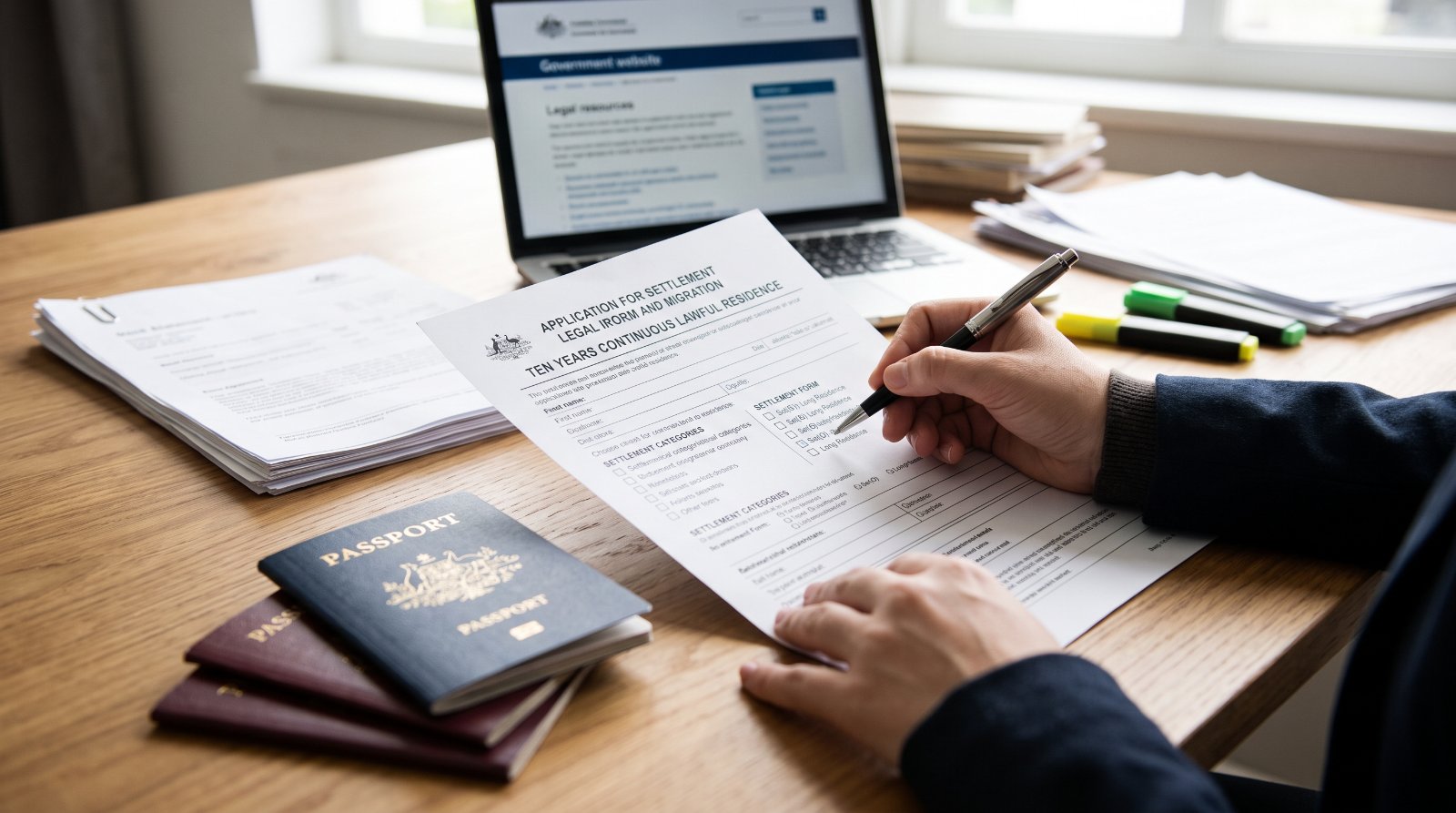
Evidential flexibility allows the Home Office to ask an applicant to fill a gap in their evidence before making a decision, rather than refusing the application outright. The Home Office sets out the principle in several places: the general evidential flexibility guidance, which covers most routes, and route-specific guidance on partners and parents under Appendix FM, asylum claims, victims of domestic abuse and fee waivers. The same core ideas run through all of them, so we only flag below where they diverge.
What is evidential flexibility?
The fee waiver guidance defines evidential flexibility as a principle which allows the caseworker ‘to decide a case where the applicant has not provided all the evidence or information set out on the application form’. More broadly, it covers asking for missing evidence, asking for evidence to be clarified, verifying it with a third party, and accepting that some evidence simply cannot be obtained.
How evidential flexibility works depends partly on whether the rules require particular documents in the first place. In Appendix FM, through Appendix FM-SE, and in some points-based routes, the rules list ‘specified’ documents which the applicant must submit. Flexibility there is mostly about fixing problems with those documents or excusing their absence.
In asylum, domestic abuse and fee waiver cases, by contrast, no particular document is mandatory. The question is whether the evidence as a whole is enough. So, evidential flexibility is more about how much weight the decision maker gives to the applicant’s own account and their explanation for what is missing.
However, evidential flexibility does not shift the burden of proof. This remains on the applicant, who should provide all the evidence they rely on with the application. In other words, evidential flexibility is no substitute for a complete application, and applicants should not assume the Home Office will give them a second chance to provide missing documents.
When will the Home Office ask for more?
The Home Office uses evidential flexibility where it appears the applicant has made an error with, or omitted, supporting evidence, or where the caseworker needs further information or verification to decide the application. For example, the caseworker may ask for missing evidence if they believe the applicant can obtain it, or ask the applicant to clarify evidence that is inadequate. The caseworker may contact the applicant, their representative or a third party such as a sponsor, and may carry out verification checks.
The Upper Tribunal has confirmed that the later iterations of the policy are wider than the earlier versions. In R (Ganeshamoorthy) v Secretary of State for the Home Department [2025] UKUT 229 (IAC), a Skilled Worker visa applicant had submitted an ordinary IELTS certificate instead of the UKVI version that the rules require. He had already achieved the required level, so there was reason to believe he could obtain a compliant certificate, and the caseworker should have given him the chance to do so. The caseworker does not need to believe that the missing document already exists, only that the applicant has it or could obtain it.
For partner and parent applications, the rules themselves set out the approach. Paragraph D of Appendix FM-SE allows the decision maker to request a missing document from a sequence (such as one bank statement in a series), a document in the wrong format, or one which does not contain all the specified information.
Arguably, that is less generous than the general evidential flexibility guidance and the Upper Tribunal’s interpretation in Ganeshamoorthy. The Home Office may well refuse a partner who submits the wrong English language test, even if it is at the correct level, without giving them a chance to submit another.
How hard the Home Office must try to obtain additional evidence also depends on the application. For applications on most routes, the caseworker makes a single request, allowing the applicant ten working days to respond. For fee waiver applications, the Home Office may give more time in exceptional circumstances such as domestic abuse or homelessness.
For victims of domestic abuse, the decision maker must make at least two attempts at contact over at least eight weeks. They must allow at least 28 calendar days each time for the applicant to respond, and they can make enquiries with the police and others on the applicant’s behalf.
When the Home Office will not ask for further evidence
The caseworker need not ask for further evidence if the information is available elsewhere, for example in a previous application. They also do not need to ask if it would make no difference because they would refuse the application for other reasons anyway. Nor do they have to let the applicant prove a requirement in a different way.
Example
Tomas applies for a Skilled Worker visa from overseas. He submits an English language test showing that he speaks English at level B2. However, it is not a UKVI-approved test. Tomas also submits his bank statements, but they do not show that he held the required amount of money to meet the financial requirement.
The Home Office caseworker does not need to ask for a correct English language certificate, because they would refuse the application for not meeting the financial requirement anyway.
Evidential flexibility does not require the caseworker to ask Tomas whether he has other bank accounts that might show he meets the financial requirement. The caseworker also does not have to ask whether his employer would certify that they would maintain and accommodate him until the end of his first month of employment.
The policy also does not apply where the Home Office suspects false documents or deception.
What if the evidence cannot be obtained?
The second strand of evidential flexibility is accepting that some evidence will never be available. Here too, the guidance is broadly consistent: the absence of a document is not fatal, but the applicant must give a reasonable explanation for it, including what attempts they have made to obtain it.
The guidance recognises the same kinds of difficulty across routes. For example, the applicant may have had to flee or leave home under duress, without time to gather documents. They may come from a country with no functioning authority to issue the documents, or they may have lost them in conflict or on their journey to safety. Some applicants cannot safely contact people in their home state to obtain documents. Others have experienced abuse, including financial abuse, which deprived them of access to their records.
For partner and parent applications, paragraph D(e) of Appendix FM-SE allows the decision maker to waive a specified document. They can also ask for alternatives if the applicant has a valid reason for not supplying it. For example, the applicant’s home state may not issue it or the applicant may have permanently lost it.
Example
Asmara applies to join her husband Daniel, a refugee, under Appendix FM. They married in a region with no functioning civil authority, and they lost the only certificate they had when conflict forced her from her home.
The decision maker can waive the requirement for a marriage certificate, but the onus is on Asmara to explain why it is missing and what attempts she has made to obtain it. Asmara does so by submitting a detailed statement setting out what happened to the certificate and why it is not possible to obtain a new one.
Asmara also submits alternative evidence, including photographs of their wedding, statements from guests who attended, and evidence of their contact since Daniel left. Lastly, Asmara and Daniel refer the decision maker to Daniel’s asylum interviews, in which he consistently referred to Asmara as his wife.
In this context, the Home Office is likely to exercise its discretion to waive the requirement for a marriage certificate.
In asylum and domestic abuse cases, because there are no specified documents as such, the guidance goes a step further and confirms that a reasonably detailed, consistent and plausible account may be enough on its own. This is particularly relevant where there is a good reason why a piece of evidence is not available.
On paper, the fee waiver guidance is narrower. It says that evidential flexibility is only likely to apply in exceptional circumstances, where other evidence is clear and compelling or there is a compelling reason why the applicant cannot provide the evidence. But the same guidance accepts that the applicant can meet the burden by giving a credible explanation of why evidence is not available. In practice, decision makers will usually accept a good, detailed explanation.
Tips and tricks
There are some practical tips that help applicants and advisers reduce the risk of refusal. For example, they can try to submit all the evidence the application needs, rather than relying on evidential flexibility. However, if the applicant cannot provide a document, they or their adviser should explain why in the application itself, and set out what the applicant has done to try to get it.
If possible, the applicant can submit alternative evidence to show that they meet the requirement. They should also check that they gave the correct contact details to the Home Office, so they do not miss a request for further evidence.
Finally, if the Home Office refuses an application without giving the applicant a chance to provide missing evidence, and the guidance says it should have, the applicant or their adviser can and should challenge the refusal on that basis.
Ganeshamoorthy also confirmed that, where the Home Office has failed to follow this policy, an applicant can submit the missing evidence with an application for administrative review, and it can be admitted. Our full coverage of this case is available here: Upper Tribunal decision on evidential flexibility and accepting new evidence in administrative reviews.